

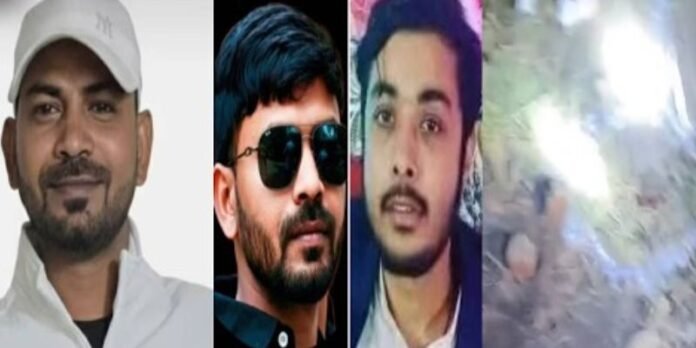
The Ghazipur murder case is not just the story of one killing. It reflects what happened after the collapse of the criminal network once associated with Mukhtar Ansari. As that empire weakened, old alliances broke apart, friendships turned into rivalries, and former partners became enemies.
At the centre of this story stands the Katra Gang. Many locals believe the gang once operated within Mukhtar Ansari’s wider network. After his death, the remaining structure allegedly came under the influence of a former Member of Parliament who belongs to the Bhumihar community. He won an election on a Samajwadi Party-Bahujan Samaj Party alliance ticket and later went to jail in a rape case.
But the criminal world follows one rule above all else: loyalty rarely lasts.
Bindu Hotel: The Hub of Power
The story revolves around Bindu Hotel in Ghazipur. Alok Rai owns the hotel, while Vineet Rai and Aadesh Rai are his sons.
Several allegations surround the hotel. Critics claim illegal liquor trade and prostitution operated from the premises. Locals also describe it as a major meeting point for the Katra Gang.
The gang allegedly included Vineet Rai, Aadesh Rai, Shankar Pandey, Jagdish Singh Yadav alias Sonu Yadav, Alok Dubey, and Kamlesh Chaudhary alias Kamlesh Bind.
Once, they all worked together, shared a table, travelled in the same vehicles, and operated within the same network. Ideas were created at Bindu Hotel, where partnerships formed and power was shared among those who met there.
However, criminal partnerships often survive only as long as mutual interests remain intact.
Over time, Bindu Hotel became the centre of a struggle for dominance within the gang. The place where friends once made decisions together eventually became the source of a deadly conflict.
The Fight That Split the Gang
Around a year ago, an argument broke out inside Bindu Hotel. The dispute quickly escalated. Abuses followed. Then the confrontation turned violent. According to allegations, members of the Rai family and their staff assaulted Shankar Pandey, Sonu Yadav, Alok Dubey, and Kamlesh Bind.
In the underworld, humiliation often demands revenge. That clash divided the Katra Gang into two camps. Men who once stood together suddenly wanted each other’s blood.
Revenge Begins With Gunfire
The first act of revenge came soon after. Shankar Pandey, Sonu Yadav, Alok Dubey, Kamlesh Bind, and their associates allegedly opened fire at Bindu Hotel. The attackers targeted vehicles linked to Vineet Rai and Aadesh Rai.
The shooting sent a clear message. The conflict had moved beyond arguments and negotiations. Fear spread across the district as tensions continued to rise.
Failed Peace Efforts
As the rivalry intensified, concern grew among local power brokers. A former BSP MP reportedly stepped in and tried to bring both sides together. Several people attempted to mediate and prevent further violence. The efforts failed.
In criminal rivalries, ego and revenge often outweigh compromise. The bitterness remained alive, and both camps continued to wait for the next opportunity.
May 29: The Day the Feud Turned Deadly
On May 29, the long-running conflict reached its most violent point. Traffic moved normally across Ghazipur, but the internal war within the Katra Gang had reached its final stage.
That day, assailants murdered Vineet Rai outside Bindu Hotel. The dispute that had started with an argument a year earlier finally ended in bloodshed. The hotel that once united the gang now stood at the centre of a murder investigation.
A Gang With a Fearsome Reputation
Local residents say the Katra Gang was known for a long time before the murder. They were involved in harassment near schools, extorting money from vendors, and other criminal activities. Over time, people began to associate their name with fear and control in the area.
Whether all allegations ultimately stand in court remains a matter for the legal process. However, the gang’s reputation had already become deeply rooted in the area.
A Birthday Party During the Manhunt
The story took another dramatic turn after the murder. While police teams searched for the accused, allegations emerged that Shankar Pandey, Sonu Yadav, and Alok Dubey travelled hundreds of kilometres from Ghazipur to Muzaffarnagar. There, they allegedly attended a birthday party at a hotel owned by Bobby Tyagi.
After the celebration, they reportedly moved towards Roorkee. Locals claim Bobby Tyagi shares business interests in Uttarakhand’s mining sector with the former BSP MP. Investigators continue to examine various aspects of the case.
Also Read: Ghaziabad Murder Case: Administration Begins Bulldozer Action Against Accused Asad’s House
When the Hunters Became the Hunted
Every criminal story at last reaches a turning point. Police started a search with their teams and expanded their search across eastern and western UP. Informers provided leads. Pressure mounted on the accused. Gradually, investigators closed in on the gang members.
The developments that followed attracted attention across the state and turned the Ghazipur murder case into one of Uttar Pradesh’s most discussed criminal investigations.
The Political Battle After the Encounter
The story did not end with the murder investigation or the police action against Kamlesh Bind. After the encounter, the case entered the political arena.
The Samajwadi Party began raising questions about caste and social identity in relation to the killing and the subsequent police action. Party leaders focused on the caste angle, while others argued that the case primarily involved gang rivalry, criminal networks, revenge attacks, and a murder investigation.
People Samajwadi Party accuse it of shifting attention away from the background of the case. They point to the Katra Gang’s alleged activities, the allegations surrounding Bindu Hotel, the year-long feud, and the ongoing police investigation.
According to them, the central question should remain whether those involved participated in criminal activities and violent acts, not their caste identity.
More Than Just a Murder Case
The Ghazipur case contains every element of a classic gang war. It began with a dispute inside a hotel. It split a criminal group into rival camps. It led to gunfire, failed negotiations, a murder, a manhunt, and police action.
Above all, it serves as a reminder that criminal alliances rarely last forever. In the underworld, today’s partner often becomes tomorrow’s enemy. Old grudges do not disappear. They simply wait for the right moment.
And when that moment arrives, the ending often unfolds not in a courtroom, but on the streets.


