

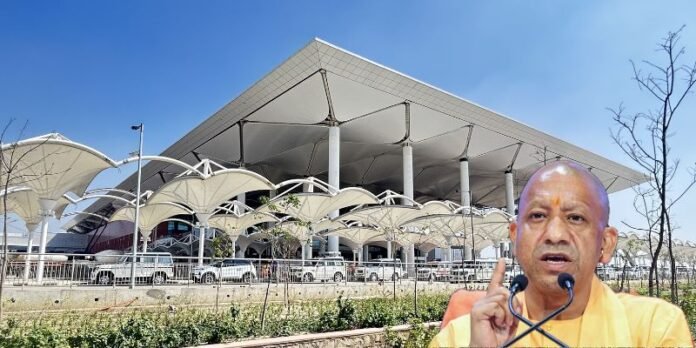
Noida International Airport is set to begin international operations soon as work on its international terminal enters the final stage. The construction is expected to finish by September. After the Bureau of Civil Aviation Security (BCAS) completes its security inspection and grants clearance, the airport plans to launch international flight services by the end of the year.
According to media reports, the airport will focus first on destinations in the Middle East, Southeast Asia, and ASEAN countries. Domestic flight services from Noida Airport have already been operating since June 15.
Interior Work in Final Phase
Airport officials said the civil construction of the international terminal has already finished. Workers are now completing the interior fit-out and other finishing work. The airport expects to complete the terminal by the end of September.
Before international flights begin, BCAS will inspect the terminal and review all security arrangements. The airport will start overseas operations only after receiving the required security clearance.
Focus on Middle East and ASEAN Routes
Media reports suggest that the first phase of international operations will mainly target the Middle East and ASEAN nations. These routes are expected to meet strong demand from business travellers, tourists, and the Indian diaspora.
Meanwhile, domestic services continue to expand. IndiGo and Akasa Air currently operate flights from Noida Airport to Bengaluru, Mumbai, Hyderabad, and several other Indian cities. However, many travellers are waiting for international services to begin.
Also Read: Noida Airport Visit: CM Yogi Notices Key Gap, Directs Officials to Act Fast
Airport Capacity to Expand in Future
The airport’s current terminal can handle 12 million passengers every year. Once annual passenger traffic reaches around 9.6 million, or 80% of its capacity, the airport plans to expand the terminal.
The expansion will increase the airport’s annual capacity to 30 million passengers. Airport management has not announced a timeline for the next phase, citing changing global conditions.


