
The political atmosphere in UP has already started heating up even though the Assembly election is still months away. Political parties have begun strengthening their organisations, reaching out to voters and working on caste equations that often decide the state’s electoral outcome.
People believe the 2027 election will mainly be a contest between the Bharatiya Janata Party (BJP) and the Samajwadi Party (SP). At first glance, that appears to be the most likely scenario. However, UP has a long history of proving that elections rarely depend only on the two biggest parties.
Several smaller regional parties do not enjoy a statewide vote base, but they hold strong influence in specific districts and among particular caste groups. Their support often shifts the outcome in closely fought seats. That is why political alliances, rather than just vote share, remain one of the most important factors in UP politics.
Why small parties matter in UP
UP has 403 Assembly seats, and any party or alliance needs 202 seats to form the government. In many constituencies, the winning margin remains very small. A swing of just two to five percent votes can change the result.
This is where regional parties become important.
These parties may not influence every district, but they command loyal support in selected regions. When they join a larger alliance, they can strengthen its social coalition. If they contest separately, they can split votes and create triangular or multi-cornered contests.
The Assembly elections in 2017 and 2022, along with the 2024 Lok Sabha election, showed that alliance partners often made the difference between victory and defeat on several seats.
Apna Dal (S): A key ally in eastern UP
Among Uttar Pradesh’s regional parties, Apna Dal (S) has built one of the strongest and most consistent political identities.
The party enjoys significant support among the Kurmi community, particularly in eastern and central UP. For several years, it has remained an important ally of the BJP and has delivered strong performances despite contesting a limited number of seats.
If the alliance continues in 2027, the BJP could retain an advantage in several constituencies across Purvanchal. However, if political equations change, the party could also influence the balance of power by choosing a different alliance.
Nishad Party: Expanding influence among river communities
The Nishad Party, led by Dr Sanjay Nishad, has emerged as an important regional player over the past few years.
Its core support comes from communities such as Nishad, Mallah, Kevat, Bind and other fishing and river-based groups. The party has developed influence across Gorakhpur, Sant Kabir Nagar, Maharajganj, Prayagraj and nearby districts.
Its alliance with the BJP gave the party greater visibility and helped it expand politically. If the partnership continues in 2027, it could strengthen the NDA’s position in parts of eastern Uttar Pradesh.
SBSP: Rajbhar votes remain politically significant
The Suheldev Bharatiya Samaj Party (SBSP), led by Om Prakash Rajbhar, continues to play an important role in eastern Uttar Pradesh despite its relatively small size.
The party enjoys support among the Rajbhar community across several Assembly constituencies. One of its biggest political strengths lies in its flexibility. Over the years, it has partnered with different alliances depending on political circumstances.
Because of this, political strategists closely watch every move made by the SBSP. If Rajbhar voters remain united behind the party in 2027, it could influence the outcome on several seats.
RLD: Western UP’s traditional force
The Rashtriya Lok Dal (RLD) does not have a statewide presence, but it remains influential in western UP.
The party has traditionally represented Jat farmers and rural interests. Its performance in recent elections shows how alliances can dramatically improve electoral outcomes.
In the 2017 Assembly election, the RLD won only one seat. In 2022, after contesting alongside the Samajwadi Party, it won eight seats.
This improvement highlighted the importance of local caste equations and alliance politics. Districts such as Meerut, Baghpat, Muzaffarnagar and Shamli continue to remain key areas where the RLD can influence electoral outcomes.
Azad Samaj Party seeks space in Dalit politics
The Azad Samaj Party, led by Chandrashekhar Azad, has not yet emerged as a major Assembly force, but it continues to build its presence in western UP.
The party has attracted support among sections of Dalit youth, particularly in Saharanpur, Nagina and nearby areas.
Chandrashekhar Azad’s victory from Nagina in the 2024 Lok Sabha election strengthened his political profile and demonstrated his growing appeal in some regions.
The party’s performance in 2027 will largely depend on its organisational expansion and candidate selection.
Could AIMIM influence close contests?
Asaduddin Owaisi’s AIMIM has not become a major electoral force in Uttar Pradesh, but political discussions often include the party because of its potential impact in closely contested constituencies.
The party fielded candidates on many seats during the 2022 Assembly election but failed to win any. Even so, it secured thousands of votes in several constituencies.
This led to political debate over whether AIMIM affected the opposition vote in certain seats. However, experts caution against drawing a single conclusion for the entire state because every constituency has different social and political dynamics.
If AIMIM contests a large number of seats again in 2027, it could influence outcomes in constituencies where Muslim voters play a decisive role and contests remain extremely close. At the same time, stronger opposition coordination or a limited AIMIM presence could reduce that impact.
Lessons from the last two Assembly elections
The last two Assembly elections underline the growing importance of regional allies.
2017 Assembly Election
- Apna Dal (S): 9 seats
- SBSP: 4 seats
- RLD: 1 seat
- Nishad Party did not register a significant Assembly performance.
2022 Assembly Election
- Apna Dal (S): 12 seats
- Nishad Party: 6 seats
- SBSP: 6 seats
- RLD: 8 seats
These results show that most regional parties increased their representation between 2017 and 2022. Their growing strength has made them more valuable to both the BJP-led NDA and the opposition.
Their strength lies in caste and regional influence
The biggest strength of these parties comes from their focused social base rather than statewide popularity.
- Apna Dal (S): Kurmi community
- Nishad Party: Nishad, Mallah, Kevat, Bind and other river-based communities
- SBSP: Rajbhar community
- RLD: Jat farmers and rural voters in western Uttar Pradesh
- Azad Samaj Party: Sections of Dalit youth
Even if these parties receive a modest statewide vote share, their concentrated support in specific constituencies often proves decisive.
The alliance question could shape 2027
One of the biggest unanswered questions before the election concerns alliances.
If the NDA retains its current partners, it may strengthen its position across eastern Uttar Pradesh and parts of western Uttar Pradesh. If the Samajwadi Party succeeds in maintaining a united opposition, parties such as the RLD could play an important role in western UP.
If regional parties choose to contest independently, more constituencies could witness triangular or four-cornered contests. In such situations, vote division may become just as important as voter support.
Small parties often become kingmakers
Uttar Pradesh’s political history shows that governments do not always emerge only because of the largest parties. Regional allies have repeatedly shaped the final outcome through their local influence, caste support and alliance choices.
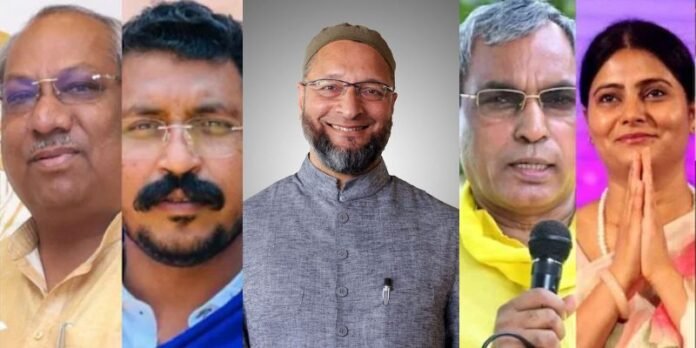
Apna Dal (S), Nishad Party, SBSP, RLD, Azad Samaj Party and, in some constituencies, AIMIM all possess the ability to influence closely fought elections within their areas of strength.
As the 2027 Assembly election approaches, the BJP, the Samajwadi Party, the Congress and the Bahujan Samaj Party will not only focus on expanding their own vote base but will also closely watch the strategies of these regional players.
The chief minister may come from a major political party, but the road to power in UP often passes through smaller allies. That is why these regional parties continue to hold the reputation of being the state’s true political kingmakers.


