

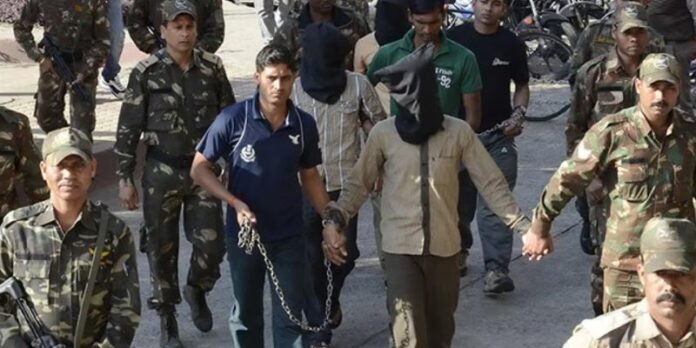
The recent arrest of 22-year-old Mohammad Sheikh from Khudadadpur village near Sanjarpur in Uttar Pradesh’s Azamgarh district has once again brought national attention to an area that has remained under the watch of security agencies for years.
According to the investigation, Sheikh was in contact with Pakistan-based handlers and criminal networks. Authorities said that he was asked to have surveillance on a prominent BJP woman leader and prepare for a targeted attack.
The arrest has brought a fresh debate about the history of radical networks in Azamgarh, the role of sleeper cells, and the challenges security agencies continue to face in preventing Islamist extremist activities.
A District With a Troubled Security History
Over the past two decades, Azamgarh, particularly the Sanjarpur and Saraimir belt, has appeared repeatedly in investigations related to terror activities. Several muslim individuals linked to the banned terror outfit Indian Mujahideen traced their roots to this region.
The district came under scrutiny and vigilance after a series of terror attacks in India in the late 2000s. Investigators found links between some accused persons and villages in Azamgarh. Since then, agencies such as the Anti-Terrorist Squad (ATS) and the National Investigation Agency (NIA) have maintained close surveillance over the area.
This history has created a lasting security concern. While the overwhelming majority of residents have no connection to extremist activities, a small network of radicalised muslim individuals has again and again attracted attention from law enforcement agencies.
The Mohammad Sheikh Case
According to the ATS, by using encrypted messaging platforms, Mohammad Sheikh had established communication with people in Pakistan and Dubai. Investigators also said that he possessed a 9mm pistol and live ammunition.
Authorities believe that foreign-based handlers attempted to recruit and radicalise him through online platforms. Investigators also allege that he tried to influence other young people by offering money and promoting extremist narratives.
The case shows a shift in the way radical groups operate today. They do not rely only on physical meetings but also used social media, encrypted applications and propaganda to identify and brainwash individuals.
Indian Mujahideen
Many security experts consider the rise of the Indian Mujahideen one of the most serious internal security challenges India faced during the 2000s. Several members and supporters of the group allegedly had links to Azamgarh.
The district became a focal point after investigations into bomb blasts in cities such as Jaipur, Ahmedabad, and Delhi. Security agencies discovered that some suspects either belonged to or had connections with villages in the region.
This history shape the approach of security in Azamgarh. Agencies remain alert because former networks, even when weakened, can leave behind ideological influence and underground contacts.
Batla House Encounter and Its Impact
The 2008 Batla House encounter was a turning point in the national narrative on terrorism. During the operation in Delhi’s Jamia Nagar area, police faced terrorists linked to the Indian Mujahideen network.
Investigators seen multiple connections back to Azamgarh. The encounter drew national attention and created political debate. Some political leaders not only questioned the operation and security agencies buit also created a against narrative in the nation. However, security agencies defended it as a necessary counter-terrorism action.
Regardless of the political arguments, the incident cemented Azamgarh’s place in India’s security discourse and increased scrutiny of the district for years afterward.
Global Extremist Links
Over time, investigations suggested that some individuals from the region moved beyond domestic terror networks and connected with international extremist organisations.
In 2016, there were reports that ISIS was using propaganda materials that featured people from Azamgarh. This raised worries that global extremist groups were trying to recruit young people in India online. It became clear that radicalisation was spreading beyond local groups. The internet made it easier for these extremist organisations to connect with and reach individuals from different countries.
Sleeper Cells and Modern Recruitment Methods
One of the biggest concerns for security agencies is the presence of sleeper cells. These networks often remain inactive for long periods and avoid attracting attention. When handlers activate them, they can quickly organise operations or recruit new members.
Modern technology has made this challenge even more difficult. Encrypted messaging apps, anonymous online accounts, and digital payment systems help extremist groups talks while evading detection.
The Mohammad Sheikh case reflects this evolving threat. Investigators believe that online communication played a key role in connecting him with foreign-based handlers.
The Crime-Terror Nexus
Azamgarh’s security story is mix of organised crime and terrorism. Over the years, investigators have seen how criminal networks sometimes provide logistical support, funding channels, duplicate documents and safe houses.
This overlap between crime and extremism creates a more complex threat. Criminal organisations often possess the resources and contacts that extremist groups need to operate.
As a result, security agencies increasingly focus on dismantling both criminal and terror-related networks simultaneously.
Also Read: UP Terror Suspects Nabbed in Gujarat; ISIS-Linked Doctor Receives Weapons, Nationwide Plot Emerges
Counter-Terror Measures Since 2017
When Yogi Adityanath became CM of UP in 2017, security agencies got a free hand to do operations against organised crime and extremist networks. Authorities expanded surveillance, targeted financial channels, and increased monitoring of suspects.
In BJP rule, law enforcement agencies also started taking action against multiple wanted criminals. These actions disrupted support systems that had helped underground networks survive.
Officials argue that sustained pressure weakened many extremist structures in the region. However, recent cases suggest that radicalisation attempts continue despite these efforts.
The Challenge Ahead
The arrest of Mohammad Sheikh shows that terrorism changes instead of going away. Even if security agencies neutralise one group, new recruiters can pop up online and form another.
The main challenge now is spotting people who might be vulnerable before extremist groups can reach them. Authorities need to improve how they gather information, keep an eye on online recruitment, and work better with local communities.
At the same time, leaders should focus on providing education, job opportunities, and community engagement to help young people avoid falling for extremist messages.
The Mohammad Sheikh case has brought back old questions about Azamgarh’s troubled past and the ongoing presence of radical groups. Although security agencies have made progress in weakening these extremist networks, the threat is still there in different forms.
Fighting terrorism in the future won’t just rely on making arrests and conducting raids. It will also need careful monitoring, community support, and ongoing efforts to prevent radicalisation. The recent ATS operation shows that security agencies are staying alert, but it also proves that the battle against extremism is far from over.


