
In UP politics, gram pradhans are not just local representatives. They are considered the strongest link between political parties and rural voters. At a time when the state government has allowed gram pradhans to continue functioning as administrators until fresh panchayat elections are held, a legal challenge to this arrangement has triggered a political controversy.
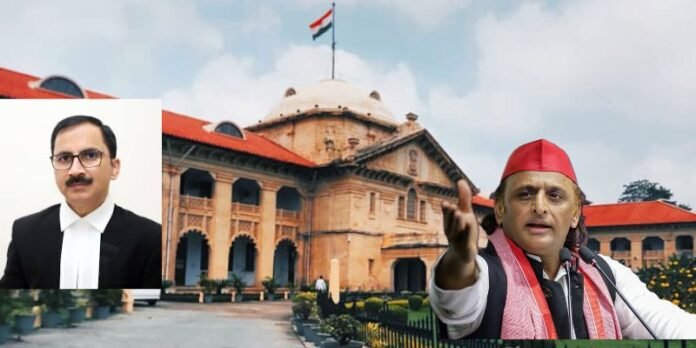
Advocate Om Prakash Prajapati has filed a public interest litigation in the Allahabad High Court challenging the government’s decision to appoint gram pradhans as administrators. Prajapati is known to be associated with Samajwadi Party events and political activities. He has also represented SP-linked interests in legal matters on several occasions. Because of this, now question is being raised about the intention behind the petition. SP indirectly want to attack the government’s decision to extend the tenure of the gram panchayat’s head.
Read More: UP Extends Tenure of Village Heads, Gram Pradhans to Act as Administrators for Six Months
Why Has the Government Taken This Decision?
The term of gram pradhans in UP had already ended. However, the state government said that conducting three-tier panchayat elections immediately was not practical. UP is a large state, and authorities are already handling board examinations, census-related work, voter list revision exercises, and preparations for the upcoming Assembly elections.
Keeping these challenges in mind, the government decided to use a special provision and allow gram pradhans to continue as administrators instead of handing control to government officials. This was to ensure development projects and welfare schemes continue without interruption in rural areas.
Elected village representatives are better placed to understand local needs than bureaucrats. The decision is both administratively practical and politically sensible.
Why Are Questions Being Raised About the Samajwadi Party?
The Samajwadi Party could not openly oppose a decision that directly affects gram pradhans, who hold considerable influence in rural UP. As a result, the legal challenge is an attempt to create hurdles through the courts rather than through direct political opposition. SP wants to create hurdles for the government to gain votes in the upcoming elections. And hence, chose this path.
Questioning the powers given to gram pradhans amounts to undermining the rights and responsibilities of village-level representatives. SP’s move that disrupts the functioning of gram panchayats could have political consequences because gram pradhans remain an important force in rural politics.
The history of UP politics shows that no major political party can afford to ignore village leadership. That is why many people see this dispute as more than just a legal matter. For them, it is also a political issue with wider implications.
For now, all eyes are on the Allahabad High Court. However, it’s clear that it’s less a legal challenge and more a political strategy to subvert government work in villages and panchayats.


