
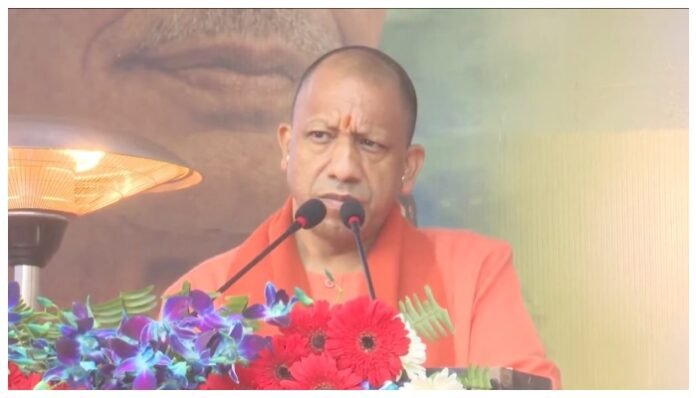
On Thursday (May 7), CM Yogi Adityanath used his speech in Deoband to send an early political message for the 2027 UP Assembly election.
From the stage of projects worth thousands of crores, CM Yogi did not speak only about roads, connectivity, and infrastructure. He repeatedly used words like “fatwa,” “riots,” “appeasement,” “Kanwar Yatra,” “law and order,” and “national spirit.”
Political observers believe this was more than a development speech. It looked like the first clear sign that BJP wants to fight 2027 on two parallel tracks — development versus opposition, and nationalism versus what it calls divisive politics.
Why Deoband Matters Politically
Deoband carries strong political symbolism in western UP. By choosing this venue, Yogi gave a message that went beyond governance.
He said that in earlier years, Deoband was known for fatwas. He also said western UP once saw riots, fear, and migration from places like Kairana.
According to him, the “double-engine government” changed that picture.
He also referred to “Vande Mataram,” national identity, Kanwar Yatra, Janmashtami, and anti-India forces.
These references suggest that BJP wants to revive the political formula that helped it dominate western UP in 2017 and 2022 — strong law and order mixed with cultural assertion.
A Direct Challenge to Opposition Politics
Yogi also mentioned West Bengal, Assam, and Puducherry while arguing that voters now prefer development and good governance.
He said people are rejecting caste-based politics and appeasement.
That line carries a direct political target. Analysts say BJP wants to challenge the social coalition politics of parties like the Akhilesh Yadav-led Samajwadi Party and the Indian National Congress.
When Yogi said society would not divide and would instead bury divisive forces, he appeared to frame 2027 as a contest between a broader nationalist identity and caste-driven political mobilisation.
Also Read: 9 Lakh Plus Government Jobs in UP, Yogi Hands Over Appointment Letters to 481 Candidates
Development and Hindutva Together
Western Uttar Pradesh has long remained politically sensitive. Events like the 2013 Muzaffarnagar riots, the Kairana migration debate, and violence in Saharanpur shaped politics in the region for years.
BJP now wants to add a strong development layer to that political base.
In his speech, Yogi highlighted the Ganga Expressway, the Delhi–Meerut RRTS, airports, industrial corridors, and the Maa Shakumbhari Corridor.
The message was clear. BJP plans to sell western UP a combined political model — visible infrastructure and cultural confidence.
Law and Order Remains Central
Yogi also said UP is now “mafia-free, riot-free, and curfew-free.”
That remains one of BJP’s strongest political claims in the state. The party has consistently argued that before 2017, crime, communal tension, and political protection networks shaped governance. It now presents itself as the force that imposed control and stability.
For 2027, that argument remains crucial.
Development alone may not be enough in a state as politically complex as Uttar Pradesh. BJP also needs issues that create emotion, identity, and ideological clarity.
That is why the Deoband speech matters. It was not just about inaugurating projects. It looked like an early draft of BJP’s 2027 election script in western Uttar Pradesh.


