
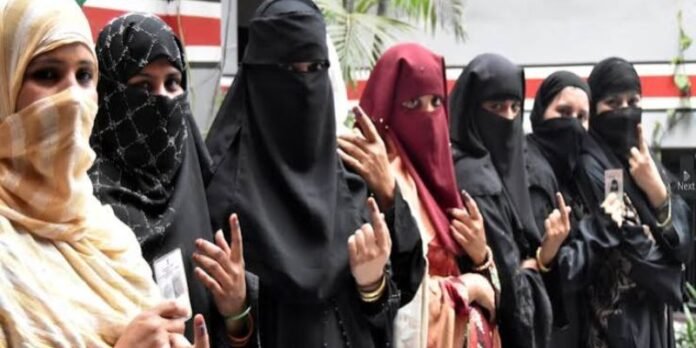
The share of Muslim voters in Uttar Pradesh has increased after the Special Intensive Revision (SIR) of electoral rolls. Political sources and data analysis indicate that Muslim voters accounted for 18.6% of the electorate before the revision. The figure now stands at 19.5%, marking a rise of about 0.9% points.
The analysis also shows strong participation from the community in voter registration. Around 35% of the newly added voters belong to the Muslim community. Officials and political observers have started verifying the figures before drawing broader conclusions.
Political Parties Study the Numbers
The Election Commission does not release voter data on a religious basis. However, parties often estimate community-wise representation through detailed electoral studies. Political groups have begun examining the revised voter list released on April 10, 2026, for both Assembly and Lok Sabha constituencies.
According to political assessments, the increase could influence electoral strategies in several regions of the state where Muslim voters already hold significant numbers.
Census Data Provides Context
The 2011 Census recorded minorities at about 20.3% of UP’s population. Muslims formed the largest share among minority communities at 19.3%. Other minority groups included Sikhs, Christians, Jains, Buddhists and Parsis.
Experts said that the proportion of minority voters generally remains close to their population share, though local variations often emerge because of migration, age distribution and voter registration patterns.
Higher Presence Among Young Voters
The data points to a noticeable rise in young Muslim voters. In the 18–21 age group, Muslim voters account for nearly 25% of registered voters. In the 18–40 age bracket, their share stands at around 22%.
Analysts say young voters from the Muslim community showed strong interest in registration during the revision process. The trend appears particularly visible among first-time voters who submitted Form-6 applications to join the electoral rolls.
Verification Process Underway
Political parties and researchers continue to examine the figures and compare them with demographic trends. They expect the verification process to provide a clearer picture of voter composition across age groups and regions of UP. It is also being seen as a threat to the demographic change that is slowly taking place in UP.


 of electoral rolls.)