
Repeated paper leak and recruitment scams across India have shaken the confidence of millions of students. From recruitment exam leaks in Punjab to alleged irregularities in junior engineer and teacher recruitments in Karnataka, several states have struggled to protect the integrity of public examinations. The controversy surrounding the NEET examination further intensified public anger, with students staging protests across the country and demanding stricter safeguards.
These incidents have highlighted a larger concern. Every paper leak delays recruitment, wastes years of preparation and weakens public trust in the examination system.
UP Conducts Long-Pending Recruitments Without Major Disruption
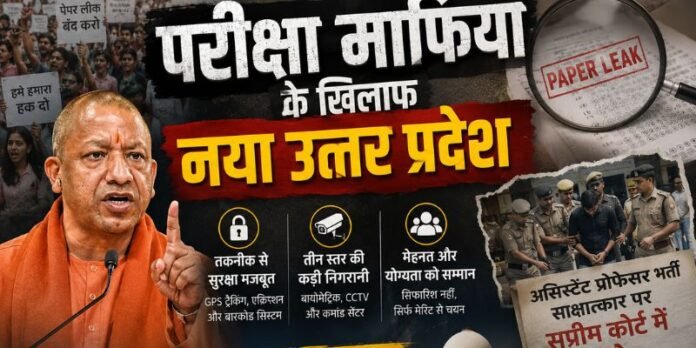
Amid this national crisis, UP has completed several large recruitment examinations through a tighter and more technology-driven system. The state successfully conducted the long-pending TGT and PGT recruitment examinations after nearly five years. Officials described the process as transparent, peaceful and well monitored.
The recruitment exercise also marked a major crackdown on organised cheating networks, solver gangs and exam mafias that had influenced recruitment processes in previous years.
Technology and Multi-Layer Monitoring Strengthen Security
Under the leadership of UP Education Service Selection Commission Chairman Dr. Prashant Kumar, the commission introduced several measures to secure the examination process.
Authorities used GPS tracking, encrypted digital systems and barcode-based monitoring for question papers. They also deployed biometric verification, live CCTV surveillance and central command centres to monitor examination centres. These measures aimed to stop impersonation, prevent leaks and ensure fair conduct.
The commission also focused on merit-based selection, allowing candidates to compete without outside influence or unfair practices.
Assistant Professor Recruitment Reaches Final Stage
The improved system also helped the long-pending Assistant Professor recruitment examination move forward. The written examination concluded successfully, and the recruitment process reached the interview stage.
However, the Supreme Court later stayed the interview process, creating fresh uncertainty for candidates waiting for final appointments. The development has delayed the recruitment despite the completion of the written examination.
Experts Stress Need for Faster Legal Resolution
Many observers believe transparent recruitment systems also require timely legal support. They argue that prolonged court cases and extended stay orders can delay appointments even after examinations conclude successfully.
Experts have suggested fast-track hearings for recruitment-related disputes so that legal proceedings do not keep vacancies pending for years. They also recommend stronger legal safeguards to prevent misuse of procedural challenges against transparent recruitment processes.
Institutional Reforms Seen as the Way Forward
Education experts say reforms should continue beyond individual administrations. They believe successful practices introduced in Uttar Pradesh should become permanent policy so that examination standards remain consistent even after changes in leadership.
With paper leak scandals affecting several states, many believe technology, strict monitoring and institutional reforms offer a practical roadmap for restoring trust in public recruitment. A transparent system, backed by strong legal and administrative support, can help ensure that merit remains the only criterion for selection while protecting the future of millions of aspirants.


