

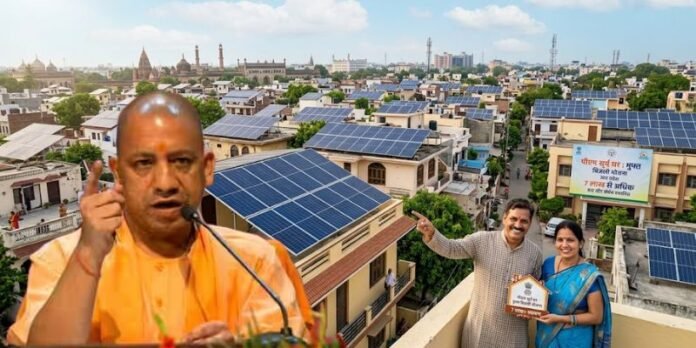
Under Chief Minister Yogi Adityanath’s leadership, Uttar Pradesh has achieved a major milestone under the PM Surya Ghar Muft Bijli Yojana. The state has installed more than 7 lakh residential rooftop solar systems, becoming the second state in India after Gujarat to reach this mark. Officials say the government has turned the scheme into a mass movement through coordinated efforts by multiple departments and agencies.
According to the state government, UPNEDA, Uttar Pradesh Power Corporation Limited (UPPCL), power distribution companies, district administrations, banks, and solar industry stakeholders worked together to speed up implementation across the state.
As of July 2026, Uttar Pradesh has received 11,58,183 applications under the scheme. Out of these, officials have installed 7,03,661 residential rooftop solar systems. These projects have created a combined clean energy capacity of 2,371.14 MW in just two-and-a-half years.
Government Credits Subsidy and Digital System for Rapid Growth
The state government said attractive subsidies from the Centre and the state encouraged more households to adopt rooftop solar. A simple online application process, transparent portal-based monitoring, and faster approvals also helped increase installations.
Officials say these measures have made Uttar Pradesh one of India’s fastest-growing rooftop solar markets. The government also expects the sector to attract more investment, innovation, and green energy businesses in the coming years.
Rooftop Solar Saves Nearly 12,000 Acres of Land
The government highlighted another major benefit of the programme. If the state had created 2,371.14 MW of solar capacity through traditional ground-mounted solar parks, it would have required nearly 12,000 acres of land.
By promoting rooftop solar, the state has saved this land for agriculture, housing, industries, and other public uses. The model has also reduced the need for land acquisition and supported environmental conservation.
State Produces Over 1 Crore Units of Clean Power Every Day
The installed rooftop solar systems now generate nearly 1.07 crore units of electricity every day, based on an average production of 4.5 units per kilowatt.
This clean electricity meets the energy needs of lakhs of families while reducing dependence on conventional power sources.
The government estimates that, at an average electricity tariff of ₹6.50 per unit, this daily power generation has an economic value of around ₹6.94 crore. In other words, households receive nearly ₹7 crore worth of free electricity every day, leading to significant savings on monthly power bills.
Lower Carbon Emissions Support Climate Goals
Officials estimate that the rooftop solar systems will generate around 389 crore units of clean electricity every year. This production will strengthen Uttar Pradesh’s energy security and reduce pressure on traditional electricity generation.
The state also expects the programme to prevent nearly 32 lakh tonnes of carbon dioxide emissions every year. The government says this contribution will support India’s net-zero targets and help reduce the impact of climate change.
According to official estimates, this reduction in carbon emissions equals the environmental benefit of nearly 14.5 crore mature trees absorbing carbon for one year.
Scheme Creates Jobs and Boosts Local Economy
The PM Surya Ghar Muft Bijli Yojana has also created new employment opportunities across Uttar Pradesh. UPNEDA has registered more than 7,000 companies under the programme, and these firms have generated over 85,000 direct jobs.
The workforce includes engineers, technicians, electricians, installation teams, project managers, survey agencies, quality inspectors, maintenance professionals, and customer support staff.
The scheme has also created indirect employment through solar module manufacturing, inverter production, electrical equipment, logistics, finance, insurance, energy consulting, MSMEs, startups, and local supply chains.
Also Read: UP Launches Green Fodder Drive, Frees Over 39,000 Hectares of Grazing Land from Encroachment
Government Targets Faster Expansion
The Uttar Pradesh government plans to expand the programme further by ensuring every eligible family can access affordable and clean energy. It also aims to simplify digital services, speed up installations, encourage more investment, and strengthen the state’s green energy ecosystem.
Officials say Uttar Pradesh now leads the country not only in rooftop solar installations but also in policy implementation, digital transparency, green employment, investment, and public participation. The government aims to make the state India’s rooftop solar capital while contributing to the national goals of energy security, sustainable development, and a cleaner future.


