

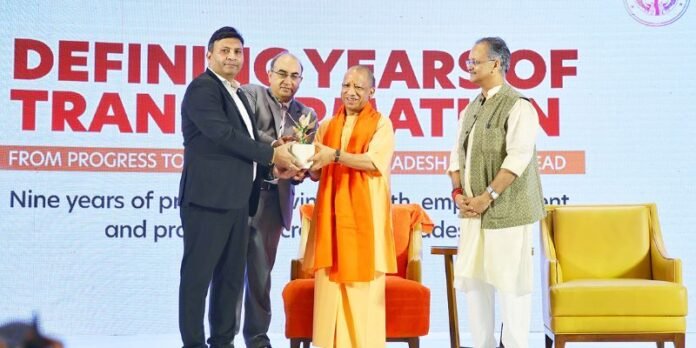
On Thursday (May 14), Chief Minister Yogi Adityanath addressed the “Defining 9 Years of Transformation: From Progress to Prosperity-Uttar Pradesh Leads Ahead” conclave organised by The Times of India (TOI) in Lucknow. During his speech, he highlighted the transformation of UP since 2017 and outlined the state government’s achievements in development, employment, industry, and agriculture.
Focus on Development and Stability
Yogi Adityanath said the conclave would help the younger generation understand UP’s development journey and strengthen the vision of “Viksit Bharat, Viksit UP.” Referring to the ongoing crisis in West Asia, he appealed to citizens to stand united with the nation. He also mentioned PM Narendra Modi’s call for national unity and said the country would collectively face every challenge.
Per Capita Income Sees Sharp Rise
The CM said UP’s per capita income has increased significantly in the last nine years. According to him, the figure stood at around ₹43,000 in 2017 and has now crossed ₹1.2 lakh. He presented this rise as a sign of improving economic conditions in the state.
Jobs and MSME Growth
CM Yogi stated that the government has distributed appointment letters to more than nine lakh youths for government jobs so far. He warned against corruption and said strict action would be taken against anyone who tried to play with the future of young people.
Highlighting industrial growth, he said around 96 lakh MSME units are currently operating in UP and these units have generated employment for nearly three crore people.
Sugarcane Farmers and Agriculture
The CM also spoke about the condition of sugar mills before 2017. He said the system remained the same, but the government changed the approach. According to him, the state has already paid 92% of sugarcane dues to farmers.
“New Model” of UP
Yogi Adityanath said Uttar Pradesh now follows a development model based on “Sabka Saath, Sabka Vikas” instead of caste, religion, language, or region. He added that all 75 districts now witness development simultaneously, creating a new model of governance focused on security, employment, infrastructure, and agricultural growth.


