
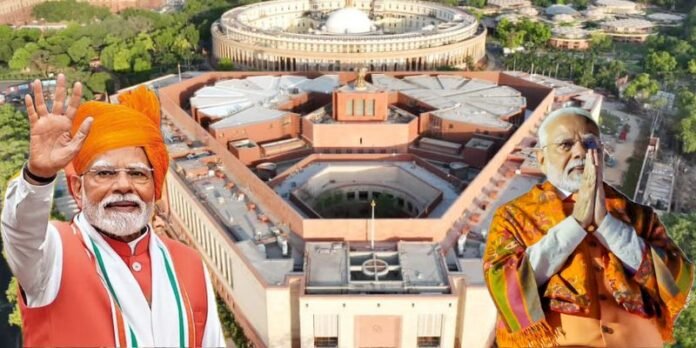
Prime Minister Narendra Modi has created history by becoming India’s longest-serving elected Prime Minister. On June 10, 2026, he completed 4,399 days in office as an elected PM. He moved ahead of India’s first PM, Jawaharlal Nehru, who served 4,398 days after winning elections.
Nehru remained PM from 1947 to 1964. However, the period between 1947 and 1952 came before India’s first general election. Therefore, many observers count only his tenure as an elected PM from 1952 onward. Based on this measure, Modi now holds the record. If Nehru’s entire tenure is counted, he served for a total of 6,131 days.
Modi also holds another major record. He has remained the elected head of government for more than 9,000 consecutive days. This period includes his time as CM of Gujarat and later as PM of India.
Economic Growth and Infrastructure Development
Over the last 12 years, the Modi government has focused heavily on economic growth and infrastructure. India has become the world’s fifth-largest economy during this period. The government has expanded highways, built new expressways, modernised railway stations, and increased airport connectivity across the country.
Digital Revolution
The government has pushed digital transformation through the Digital India campaign. Unified Payments Interface (UPI) has changed the way people make payments. Millions of Indians now use digital transactions every day. The government says digital systems have improved transparency and reduced corruption in many areas.
Welfare and Social Development
Several welfare programs have targeted poor and middle-class families. Under the Pradhan Mantri Awas Yojana, millions of families have received support for permanent housing. The Jal Jeevan Mission aims to provide tap water to every household. These programs focus on improving basic living conditions.
Health and Women’s Empowerment
The Ayushman Bharat scheme provides health insurance coverage to millions of low-income families. The program helps people access medical treatment without facing heavy expenses.
The government has also launched several initiatives for women. The Ujjwala Yojana provides free LPG connections to poor households. Campaigns such as Beti Bachao, Beti Padhao encourage education and support for girls. Parliament also passed the Nari Shakti Vandan Adhiniyam to increase women’s representation.
National Security and Major Reforms
The government has emphasised national security and defense modernisation. It has promoted domestic defensemanufacturing through the Make in India initiative.
Major economic reforms include the introduction of the Goods and Services Tax (GST), which created a unified tax system across the country. The government also introduced corporate tax reforms to encourage investment and business growth.
Cultural, Legal, and Global Initiatives
The Modi government has supported projects linked to India’s cultural heritage, including the Ram Temple in Ayodhya and the Kashi Vishwanath Corridor.
Important legal decisions include the removal of Article 370 from Jammu and Kashmir, the ban on triple talaq, and the implementation of the Citizenship Amendment Act (CAA).
On the global stage, India has increased its diplomatic presence and positioned itself as a leading voice of the Global South. The government has also promoted renewable energy through the International Solar Alliance and announced a net-zero emissions target for 2070.
As Narendra Modi completes 4,399 days as an elected PM, he enters the record books. His tenure has seen major initiatives in infrastructure, digital technology, welfare, national security, and global diplomacy, making it one of the most significant periods in contemporary Indian politics.


