
CM Yogi Adityanath strongly stated that roads exist for public movement, not for Namaz gatherings. He said people should offer prayers at mosques or designated places. He also warned that the government would not allow any activity that blocks traffic or creates inconvenience for the public.
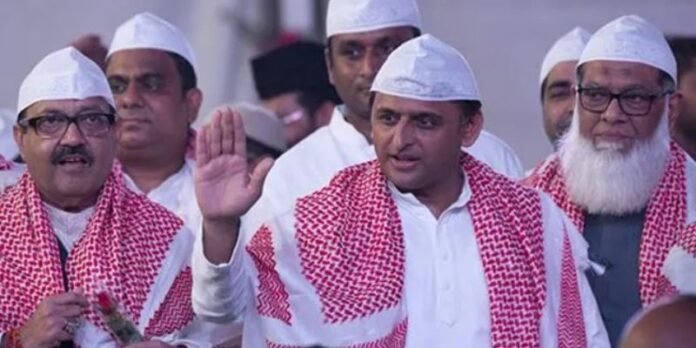
Reacting to this, Akhilesh Yadav said that if space is limited and people are praying on roads, others should not have a problem with it.
Akhilesh Yadav should understand that the statement was not against Muslims or Namaz, it was more about law and order and public safety. Roads are meant for transport and free movement. Whenever any gathering blocks traffic, creates jams, or disrupts daily life, authorities must step in. This principle should apply equally to every religion and every public activity.
Politically Motivated Statement By Akhilesh to Appease Muslims Before Elections
It was evident from Akhilesh Yadav’s remarks that it is politically motivated rather than practical. A responsible leader should first support law and order instead of defending activities that can disturb public convenience just to keep its Muslims vote bank happy. Traffic congestion, delays for emergency services, and inconvenience to commuters are real problems that ordinary citizens face during such gatherings.
Akhilesh’s repeated justification of roadside prayers sends the wrong message. Instead of encouraging proper arrangements at designated places such as mosques, such statements normalise the use of public roads for religious display. This creates frustration among common people and destroys the social fabric and puts the Samajwadi Party as a Muslim appeasement party.
Also Read: Yogi Adityanath Warns Against Prayers on Roads Ahead of Bakrid
At the same time, the SP claims the BJP is using the issue for political polarisation. According to the party, the government put religious controversies to shift focus away from unemployment, inflation, education, and reservation-related debates.
However, this is not true. The government has the responsibility to maintain law and order, while opposition leaders should avoid statements that appear to justify Namaz on roads just for electoral gains.
Religious freedom is important in a democracy, but public spaces cannot function without rules. Equal laws and equal enforcement remain essential for social harmony. In the end, ordinary people expect practical solutions, not political statements designed to strengthen vote banks.
CM Yogi’s statements is in parallel to the Indian constitution, where public safety is more important than religious appeasement. Religion is a personal matter and should be dealt with in personal spaces, not in public spaces to createhavoc on roads.


