

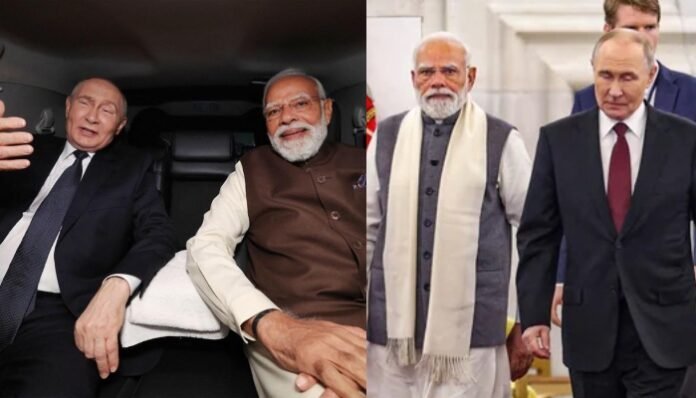
Russian President Vladimir Putin’s brief 26–27 hour visit to India did not produce dramatic announcements or headline-grabbing defence deals. There was no confirmation of the much-talked-about SU-57 fighter jet agreement or any fresh S-400 missile deal. However, judging the visit only by what did not happen would miss the larger picture. In reality, this was a visit focused on consolidation, stability, and future-oriented cooperation rather than instant breakthroughs.
At a time when global politics is increasingly polarised, India and Russia appear to be carefully recalibrating their partnership. Instead of flashy agreements, both sides chose to strengthen cooperation in areas that directly affect economic security, energy needs, employment, and long-term strategic autonomy. Therefore, the outcomes of this visit may prove more durable than immediate defence announcements.
1. No Big Defence Deals, but Strategic Balance Remains
To begin with, the absence of major defence deals should not be seen as a setback. India’s strategic environment has changed significantly over the past decade. Today, New Delhi engages with multiple partners—Russia, the US, France, and others—without placing all its bets on one camp. As a result, India appears cautious about signing headline defence agreements that could narrow its strategic options.
Moreover, India’s defence priorities are shifting toward indigenisation and technology transfer. The emphasis on shipbuilding cooperation under the “Make in India” framework reflects this approach. Rather than importing finished platforms, India wants joint production, skill development, and long-term capability building. Hence, cooperation in shipbuilding, ports, and Arctic-class vessels fits neatly into India’s broader defence-industrial goals.
At the same time, Russia remains India’s most reliable long-term defence partner in critical sectors like nuclear energy and submarine technology. Therefore, the visit signals continuity rather than rupture. It also suggests that defence cooperation is entering a more selective Phase. This is aligned with India’s multi-alignment foreign policy.
2. Agreements That Touch Everyday Lives
While defence deals dominate headlines, the real impact of diplomacy is often felt in less visible areas. In this context, several agreements signed during the visit directly affect common citizens. One of the most important is the manpower mobility agreement. This will allow Indians to work temporarily in Russia and vice versa. This creates legal pathways for employment and simultaneously curbs illegal migration.
Similarly, India’s decision to allow Russian citizens a 30-day free e-tourist visa is likely to boost tourism and people-to-people contact. As a result, sectors such as hospitality, travel, and local services stand to gain. These are small steps, but over time they help normalise bilateral relations beyond elite diplomacy.
Another critical area is agriculture. Both nations signed a fertiliser agreement which will ensure a steady supply of urea, potash, and phosphates. For Indian farmers, this is crucial. Fertiliser shortages directly impact food prices and rural stability. Therefore, long-term supply arrangements at stable prices strengthen India’s food security and reduce vulnerability to global market shocks.
In addition, cooperation in healthcare and medical education will encourage joint research, student exchanges, and better preparedness for future health crises. Taken together, these agreements show that the visit was designed to deliver practical benefits rather than symbolic wins.
3. Energy Security
Energy cooperation remains the backbone of India–Russia relations. During the visit, Russia assured uninterrupted oil and gas supplies to India. This commitment is important, especially as India works to shield itself from global energy volatility. Furthermore, both sides agreed to expand trade using national currencies, reducing dependence on the US dollar.
More importantly, the nuclear energy agreement marks a forward-looking shift. Cooperation will continue on large nuclear plants like Kudankulam, but attention is now also turning to Small Modular Reactors (SMRs). These portable nuclear systems are compact, efficient, and well-suited for remote or energy-deficient regions.
As a result, India gains access to next-generation nuclear technology that could support industrial growth and clean energy transitions. At the same time, joint work on Arctic research and shipping routes signals India’s growing interest in emerging global trade corridors. Thus, energy and infrastructure cooperation underline a shared vision that extends well beyond short-term needs.
4. A Sensitive Test of Trust: Indians in the Russian Army
Despite the positive outcomes, the visit was not without difficult conversations. Prime Minister Narendra Modi raised the issue of Indian citizens recruited into the Russian armed forces. According to official figures, at least 44 Indians are currently serving in the Russian military, often after being misled by informal recruitment channels.
This issue is both diplomatic and humanitarian. On one hand, India must protect its citizens from risky overseas employment. On the other, it must address the matter without damaging a strategic partnership. By raising the issue directly with President Putin, India signaled a more confident and transparent approach to diplomacy.
Consequently, this episode reflects a shift in India’s foreign policy style. Partnerships no longer mean silence on uncomfortable issues. Instead, India appears willing to assert its concerns while maintaining dialogue. This balanced approach could define New Delhi’s future engagements with major powers.
Quite But Strong Diplomacy
At last, one can say, Putin’s India visit may not have delivered SU-57 or S-500 but it strengthened the foundations of a complex and evolving partnership. By focusing on energy, employment, agriculture, nuclear technology, and people-to-people exchanges, both countries invested in stability rather than spectacle.
At a time of changing global alliances, India and Russia seem committed to maintaining strategic space for each other.The visit sends a clear message: the relationship is adapting, not fading. While defence deals can wait, trust, economic resilience, and future readiness cannot.
Ultimately, this was diplomacy done quietly—but with lasting consequences.

