

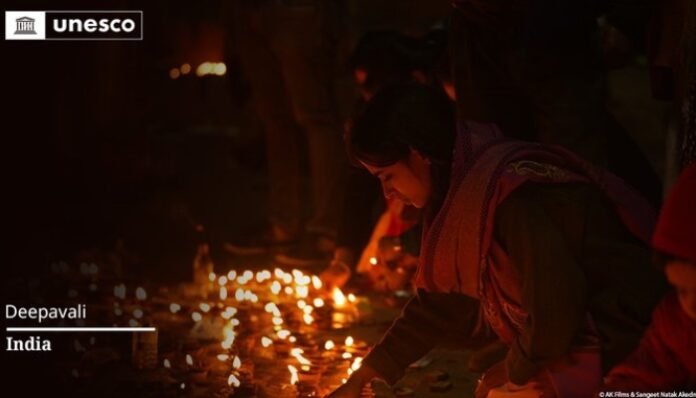
Deepavali, the Festival of Lights, has been inscribed on UNESCO’s List of the Intangible Cultural Heritage of Humanity. The announcement was made during the 20th session of the UNESCO Intergovernmental Committee, held at Delhi’s historic Red Fort from December 8 to 13, 2025. With this, Deepavali becomes the 16th cultural element from India to receive this global recognition.
The inscription marks an important milestone for India’s living traditions and highlights the global relevance of Deepavali, which is celebrated across regions, communities and generations.
UP CM Welcomes the Honour
Uttar Pradesh CM Yogi welcomed UNESCO’s recognition of Deepavali and called it a proud moment for the nation. He said the honour carries special significance for Uttar Pradesh, as Ayodhya—believed to be the birthplace of the first Deepavali celebrations—is the sacred land of Prabhu Shri Ram.
CM Yogi also added that the global recognition reflects India’s rising cultural stature under PM Modi’s leadership and said the enduring light of Ayodhya would continue to inspire humanity towards truth and harmony.
The inclusion of Deepavali in UNESCO’s Intangible Cultural Heritage List is seen as a tribute to millions who celebrate the festival with devotion, to artisans who keep its traditions alive, and to the timeless values it represents—showing the world that India’s heritage is not just remembered, but lived and passed on.
India’s Growing Presence on UNESCO List
Moreover, With the addition of Deepavali, India now has 16 elements on UNESCO’s Intangible Cultural Heritage List. These include Garba of Gujarat (2023), Durga Puja in Kolkata (2021), Kumbh Mela (2017), Yoga (2016), Thatheras’ brass and copper craft of Punjab (2014), Sankirtana of Manipur (2013), Buddhist chanting of Ladakh (2012), Chhau dance (2010), Kalbelia folk songs and dances of Rajasthan (2010), Mudiyettu of Kerala (2010), Ramman of the Garhwal Himalayas (2009), Kutiyattam Sanskrit theatre (2008), the tradition of Vedic chanting (2008), and Ramlila, the traditional performance of the Ramayana (2008).
UNESCO Session and Global Support
The decision to inscribe Deepavali was adopted in the presence of delegates from 194 UNESCO member states, along with international experts and cultural representatives from across the world. UNESCO described Deepavali as an annual living tradition that continues to shape social, cultural and spiritual life in India.
PM Modi welcomed the recognition, stating that Deepavali is deeply connected to India’s culture and values and reflects the soul of the civilisation.
Meaning and Traditions of Deepavali
Deepavali is celebrated on the new moon night, when homes, streets and temples are lit with rows of oil lamps, creating a warm golden glow. Subsequently, the lighting of lamps symbolises the victory of light over darkness and good over evil. Fireworks light up the evening sky, adding to the festive spirit.
Preparations for the festival include cleaning homes, markets and public places, which promote hygiene and healthy living. The gathering of families and friends during the festival strengthens social bonds and emotional well-being.
Celebrations in Nepal
The UNESCO recognition was also welcomed beyond India. In Nepal, a special musical bhajan evening was also organised at the Pashupati Temple premises, where lamps were lit to celebrate the occasion. Members of the Indian community and local residents expressed happiness over the global acknowledgement of the festival.
Indian Citizens Association of Nepal (ICAN) President Manoj Kandoi said that international recognition of Deepavali would increase global awareness and strengthen efforts to protect community-based traditions for future generations.
Kamal Khandelwal, a resident of Nepal, congratulated the community that celebrates Deepavali every year as a part of its customs. He said that the recognition of Diwali as UNESCO’s cultural heritage fills him with pride and honour.

