

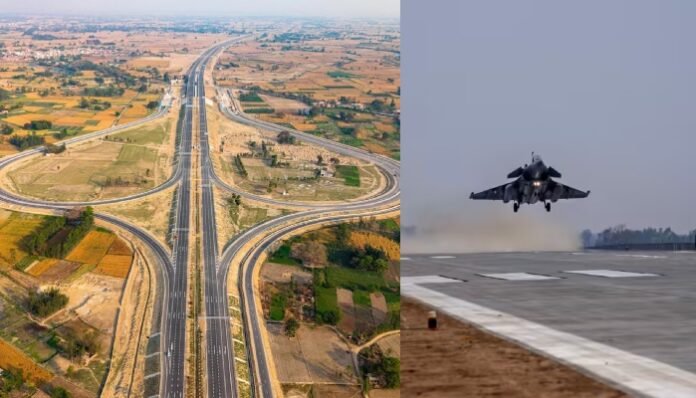
The Ganga Expressway has positioned itself as a major milestone in India’s infrastructure push, combining high-speed connectivity with strategic utility. On Wednesday (30 April), PM Narendra Modi inaugurated the 594-km-long expressway in the presence of UP CM Yogi Adityanath, marking a significant addition to the state’s expanding expressway network.
Stretching from Meerut to Prayagraj, the six-lane, access-controlled highway connects 12 districts, including Hapur, Bulandshahr, Amroha, Shahjahanpur, Hardoi, Unnao, Rae Bareli, and Pratapgarh. Authorities have designed the expressway to support speeds of up to 120 kmph, with provisions for expansion to eight lanes. The project reduces travel time between western and eastern UP from 10–12 hours to approximately 6–8 hours, improving mobility for passengers and freight.
Strategic Importance for Defence
Beyond its economic role, the Ganga Expressway carries strategic significance. A 3.5-km-long airstrip along the route enables fighter aircraft to take off and land during emergencies. This feature provides the Indian Air Force with an additional operational option, especially during wartime or disaster situations.
Keeping Pakistan and China in mind, this will really help the Indian Air Force during direct confrontation with our hostile neighbours. The airstrip allows rapid deployment and dispersal of aircraft, reducing reliance on conventional airbases. Such dual-use infrastructure strengthens India’s defence preparedness, particularly in northern regions that remain sensitive from a security perspective.
With this project, UP continues to expand its network of high-speed corridors, reinforcing its identity as an “Expressway Pradesh.” The Ganga Expressway stands out not only for reducing travel time and boosting economic growth but also for enhancing strategic readiness through integrated infrastructure planning.
Connectivity and Economic Impact
The expressway strengthens links between western Uttar Pradesh’s industrial centres and the agricultural regions of the east. This improved connectivity is expected to support more balanced regional development. The Yogi government has planned 12 integrated manufacturing and logistics clusters along the corridor, covering over 6,500 acres.
Officials report nearly 1,000 investment proposals worth around Rs 47,000 crore linked to the project. Improved access has already begun to influence real estate activity, particularly in districts such as Meerut and Prayagraj. Analysts expect land values along the corridor to rise significantly as infrastructure and industrial projects take shape.
The expressway also enhances access to key religious destinations, including Prayagraj and Varanasi. Better road connectivity is likely to increase tourist and pilgrim movement, supporting local economies and service sectors.
UP, under the leadership of CM Yogi, has enhanced its image in economic growth, infrastructural developments, defence production and religious tourism. These expressways have helped a lot in achieving the economic and tourism targets of the state.


