
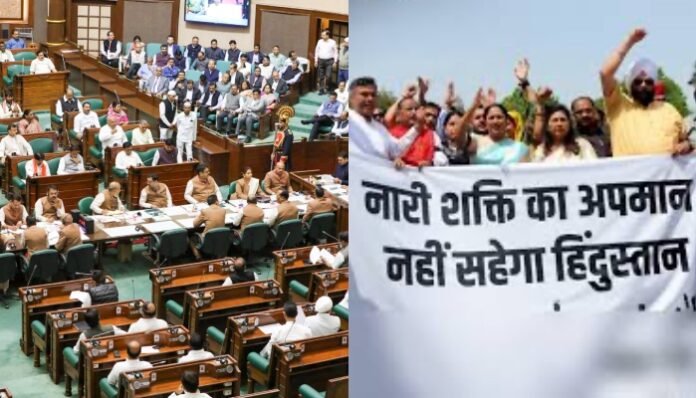
The Uttar Pradesh Legislature will hold a special one-day session on Thursday (30 April). The session will focus on the Women’s Reservation Bill. The BJP government plans to bring a condemnation motion against the Samajwadi Party and Congress. The government claims these parties blocked the bill in the Lok Sabha.
Finance and Parliamentary Affairs Minister Suresh Khanna will present the motion in the Assembly. After that, leaders from different parties and MLAs will take part in the discussion. Political tensions remain high, and disruptions are likely in both Houses during the session.
The state cabinet recently approved this move. The government wants to expose what it calls an opposition conspiracy against women’s reservation. The session will also include discussions on women’s empowerment. Leaders may raise issues such as women’s safety, rights, jobs, education, and social participation.
Focus on Women’s Issues and Key Addresses
The Assembly will give more time to women members to speak. CM Yogi will address the House later in the evening. Before him, Leader of Opposition Mata Prasad Pandey and other party leaders will share their views.
Also Read: “They Fear Your Power” — Modi Tells 50,000 Women SP Blocked Their Rights for 40 Years
The session will not include Question Hour. The House will also table several ordinances, notifications, and rules. If needed, the government may reintroduce some bills.
Advisory Committee Meeting Sets Agenda
Today (29 April), the Business Advisory Committee met at Vidhan Bhavan. Deputy CM Keshav Prasad Maurya chaired the meeting. Leaders from all parties discussed the session agenda and proceedings.
Maurya urged all parties to maintain dignity and focus on public issues. Leaders agreed to ensure smooth functioning and meaningful debate. Opposition leader Lal Bihari Yadav also shared his suggestions and supported discussions on public interest topics.
The House will table several ordinances, including amendments to the Uttar Pradesh Public Service Tribunal, Revenue Code, and Private Universities Act. Other ordinances relate to forestry, industrial universities, and criminal law amendments.
The session aims to highlight political differences while keeping focus on women’s rights and governance issues.


